
The Truth About Tolls When Transiting Between Countries in Europe
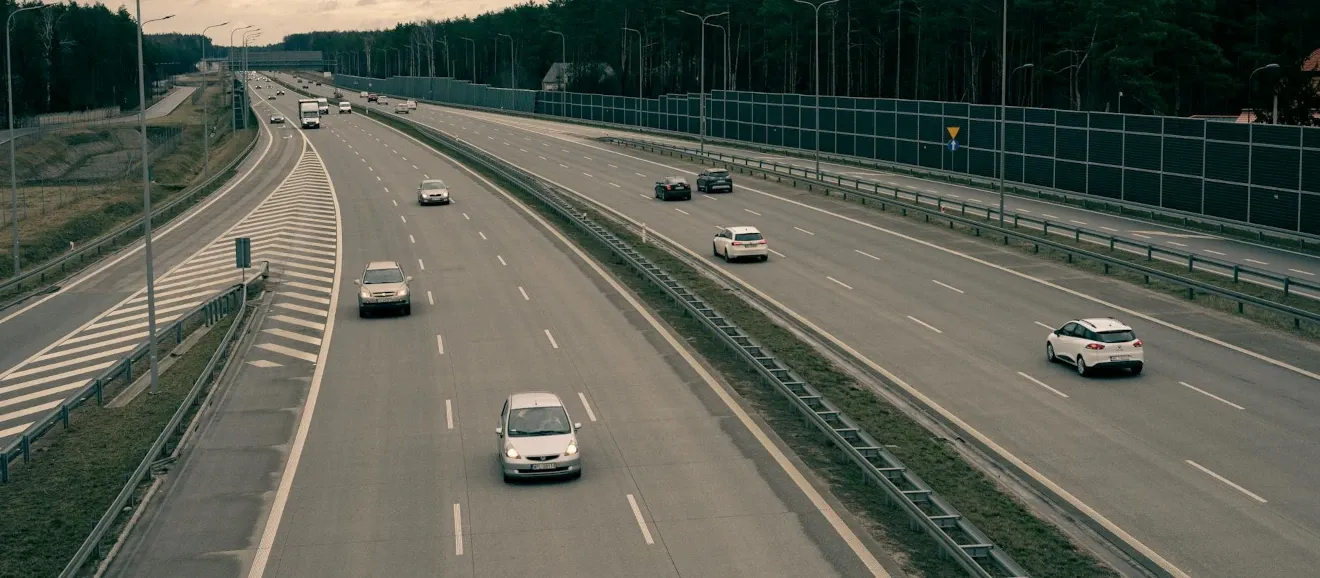
A practical explanation of how tolls and vignettes apply when transiting between European countries. Learn why “just passing through” doesn’t exempt drivers from payment and how different toll systems handle transit traffic.
This is one of the most frequent and costly misconceptions about road travel in Europe. Many drivers believe that transit is exempt from payment.
That if you're "just passing through" a country, staying for an hour or two, the rules magically relax. In Europe, they don't.
Whether you pay tolls when transiting a country has nothing to do with your plans and everything to do with the roads you drive on. Europe doesn't charge for staying. Europe charges for access.
Let's get this straight, country by country.
The One Rule You'll Always Need to Remember
In Europe, there's no such thing as "free transit" on motorways.
There's only one question that matters: Were you using a controlled road without paying or permission?
If you are, it doesn't matter if it was for five minutes or several hours. The toll system will treat you the same as a local driver.
Transit in Toll-Road Countries
In toll road countries, transit won't exempt you from payment. It just follows a different process than vignette countries.
In Italy, France, and Croatia, the tolls depend on where you enter and exit.
If your transit route includes:
- Entering a toll motorway
- Driving across part of the country
- Exiting later
You pay for the distance driven. No more, no less. It might feel a little fairer, but you still pay.
Transit Tolls in Vignette Countries
In vignette countries, transit does not apply. Accessing a motorway or controlled expressway means that you must have a valid vignette before accessing, regardless of how long you intend to stay.
Austria, Slovenia, Slovakia, or the Czech Republic are classic vignette transit countries.
Drivers encountering these countries often:
- Cross the border
- Stick to the main roads
- Think they can pay later
The reality is that payment was already due as soon as you accessed the road. Whether it's 3km or 300km, the road is paid for with a vignette. If you miss it, you pay a fine instead of tolls. That's it.
It's not distance-based. It checks if you have the right to enter. The fines are steep. Don't make this error.
Switzerland: Transit Is the Worst Case Scenario
Switzerland is a special case.
- It requires only an annual vignette
- The country offers no short-term solutions
- Motorway enforcement is strict
This means that:
- A 20-minute transit on the motorway still requires an annual vignette.
- There is no transit discount.
- There is no exception to motorway pricing.
That is why the cost of transit in Switzerland seems so high.
Germany: The Exception That Confuses Everyone
Germany is the reason this question exists for many drivers.
For passenger cars:
- Autobahnen are free
- No vignette exists
- No distance-based toll applies
It is possible for transit to cost you €0 in tolls. But this is an exception, not the European rule.
And even in Germany:
- Trucks pay LKW-Maut.
- Environmental zones exist.
- Certain tunnels or ferries are tolled.
Drivers shouldn't treat this as the norm. It is very much a special case in Europe.
The Most Common Transit Mistakes That Will Cost You
Assumptions and lack of knowledge can easily lead to costly mistakes when transiting through Europe. Here are a few common ones:
- I'm only passing through: The toll system doesn't care why you're on the road.
- I'll avoid the tolls: You can't get around the tolls in vignette countries.
- I didn't see a booth: Vignette and free-flow systems do not have booths.
- It's probably free near the border: That's often where enforcement is the strongest.
Can You Transit Without Paying at All?
It is possible, but only if all of the following conditions are met:
- There are no vignettes in the country
- You do not use toll motorways
- You stick to local or national roads
- You never accidentally enter a controlled road
This is possible in some countries. It is highly unlikely in others, particularly Alpine and Central European transit countries.
Why Europe Is So Strict About Transit
Europe is small, dense, and highly interconnected.
Transit traffic:
- Damages roads
- Causes congestion
- Uses roads without paying locally
Vignette systems are precisely intended to optimize the monetization of transit traffic without stopping vehicles at borders.
From the system's perspective, transit traffic is the target group, not an edge case.
The Simple Truth
Tolls are almost always a part of driving through Europe. They might show up in different ways, but you'll probably end up paying them.
You may pay:
- Upfront (vignette)
- Per kilometer (toll road)
- Per crossing (tunnel or pass)
But the idea of free transit on European motorways is mostly a myth, with Germany being the notable exception.
Prepare Before You Go
When planning a European road trip, never ask: Am I staying in this country? The better question concerns the type of road and toll system the country uses.
Because in Europe, the road doesn't care where you're going or why you're driving. It only cares whether you were allowed to be there.
Stay informed with our travel blog
From border rules to toll-saving tips, our blog has everything you need to make your trip smoother.
Italy Free-Flow Tolls Explained: How to Avoid Missed Payments
Croatia e-vignette: More expensive and delayed
The introduction of the digital e-vignette in Croatia initially planned for the beginning of the year, has been further delayed and will be more expensive than initially expected. Holidaymakers in Croatia should be prepared for rising toll costs and continue to use the existing toll system. This article provides an overview of the reasons for the delay and explains what travellers need to know when travelling through Croatia.
Adria: Pay Attention to Traffic Regulations for Your Camping Trailer
Regarding your question about warning panels for your camping trailer, the necessity of such panels depends on the specific road traffic laws of the countries…