
Managing The Cost of Tolls and Vignettes When Driving in Europe
A practical guide to managing toll and vignette costs when driving across Europe. Learn how to calculate payments by country, avoid fines, handle special routes, and plan toll expenses correctly before your trip begins.
Drivers unfamiliar with Europe are often confused by the toll system. Europe as a whole does not have tolls in the simplest terms. Europe is not a single country. It has a collection of different toll systems. To calculate without understanding the system is to guess, and guesswork usually leads to fines.
How do you avoid these fines? By understanding the system.
Below, you will find a straightforward way to calculate tolls anywhere in Europe, followed by an example of how it is done on the route from Germany to Austria to Italy.
Step 1: Understand What Toll Means in Europe
Before you begin calculating, you must begin by classifying the toll system. There are three. If you mix them up, nothing you calculate will be of use to you.
1) Distance-Based Toll Roads
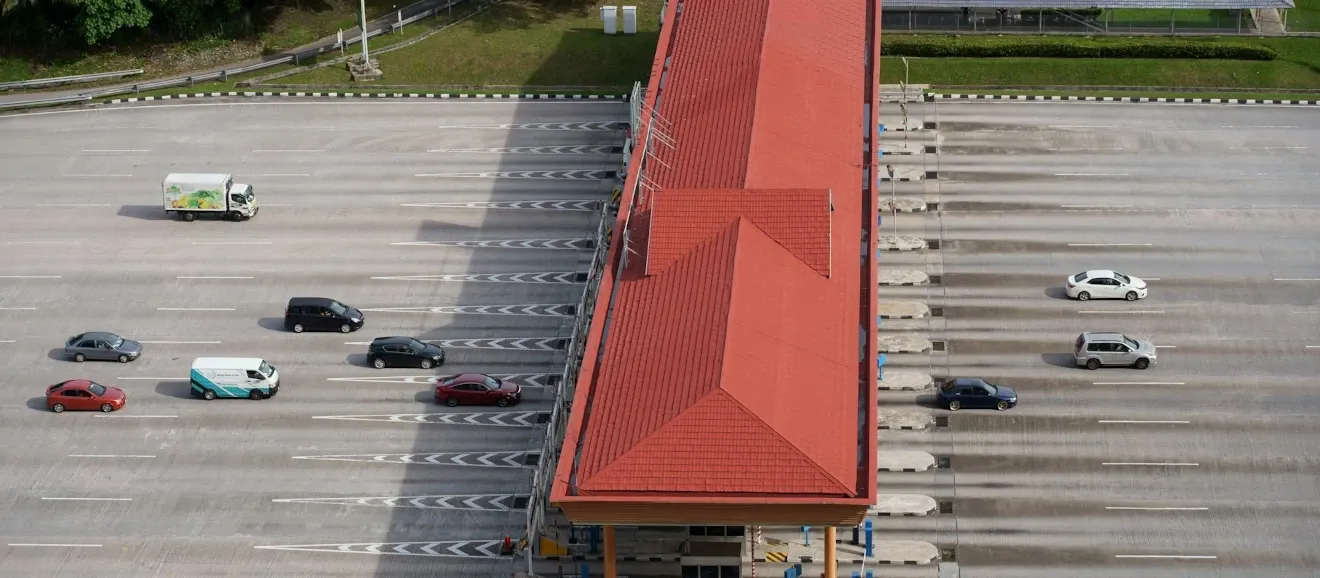
You pay for the motorway sections you actually use. Payment is made at booths or electronic toll gantries, depending on distance and vehicle type.
2) Time-Based Vignettes
You pay for time, not distance (1 day, 10 days, 2 months, 1 year). Once paid, you can use the roads as much as you want within the valid time period.
3) Special Sections
These can be added on top of a vignette system or be found in countries where otherwise there are no tolls. People often run into trouble at tunnels.
You can't estimate costs until you know which of these systems apply per country and if special sections are on your route.
Step 2: Define Your Route Based on Countries
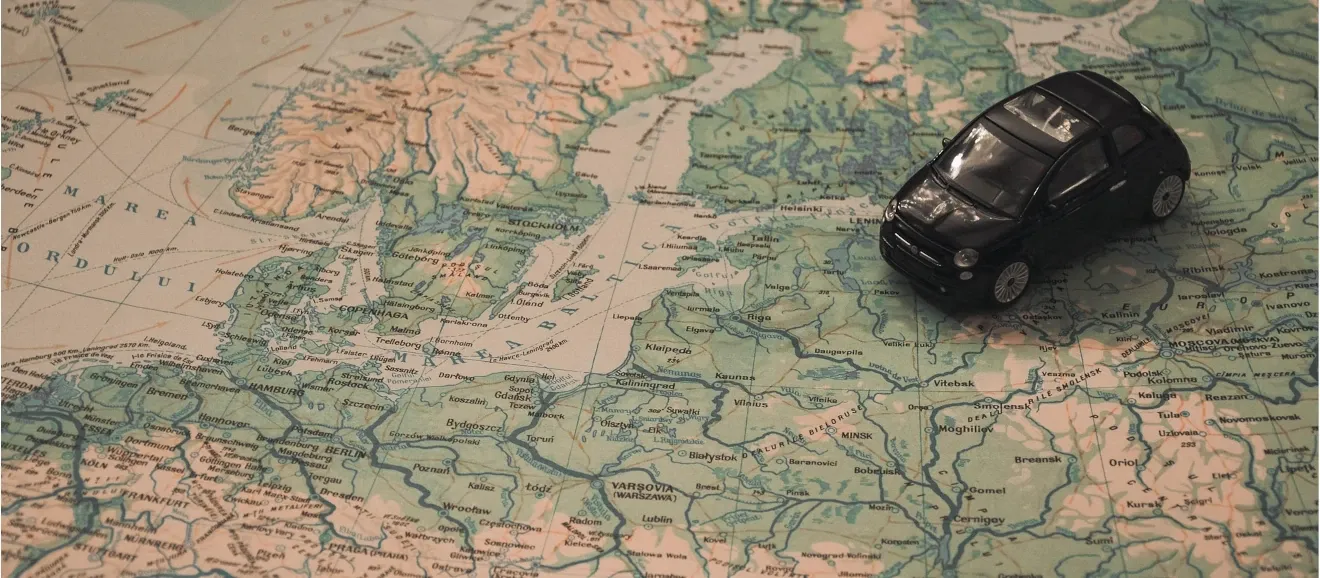
Munich to Venice is not a complete route definition. You have to list all the countries you will be entering.
A better example is:
- Germany
- Austria
- Italy
The borders are where the rules change. Transit countries are counted even if you drive 20 minutes through them.
Do this every time:
- List all the countries you will be entering, including transit countries.
- Determine if you will be using motorways/expressways.
- Hold one alternative route in reserve.
Step 3: Identify the Charging System for Each Country
Follow the list of countries on your route and determine their charging system. Using the example route above:
Germany
- System: No general motorway toll for passenger cars.
- Implication: €0 for Autobahn use (for cars), no matter the distance.
Austria
- System: Vignette on motorways and additional tolls on specific Alpine routes.
- Implication: You must have a valid vignette before entering Austrian motorways, and you may still need to pay extra for specific tunnels/passes.
Italy
- System: Distance-based toll roads.
- Implication: You pay when exiting motorways; the cost depends on distance and vehicle class.
At this point, you still haven't calculated money; you've only made calculation possible.
Step 4: Lock the Vehicle Class
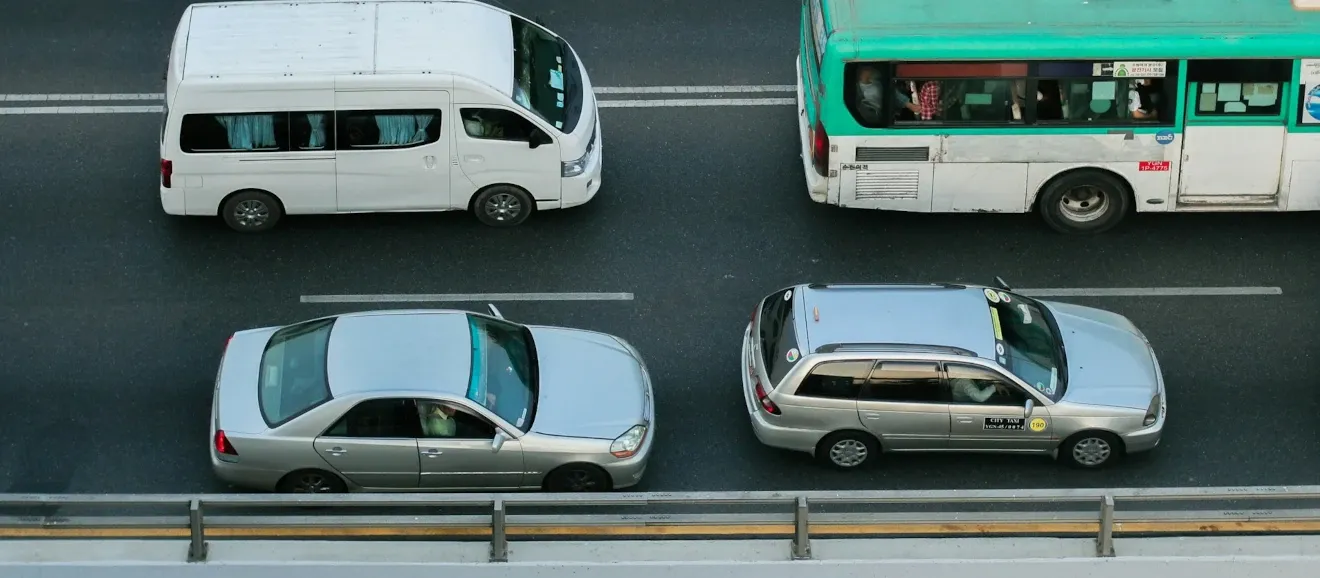
Tolls and vignettes are not priced for "a car." They're priced for a class.
You must define:
- Passenger car vs van vs camper
- Trailer attached or not
- Axles/height/weight thresholds
In vignette countries, the tolling system for heavier vehicles could be different. On Italian toll roads, the vehicle category has a direct influence on the per-kilometer toll.
If you are renting a car, check the official classification with the car rental company. Don't make an assumption.
Step 5: Decide On a Calculation Method
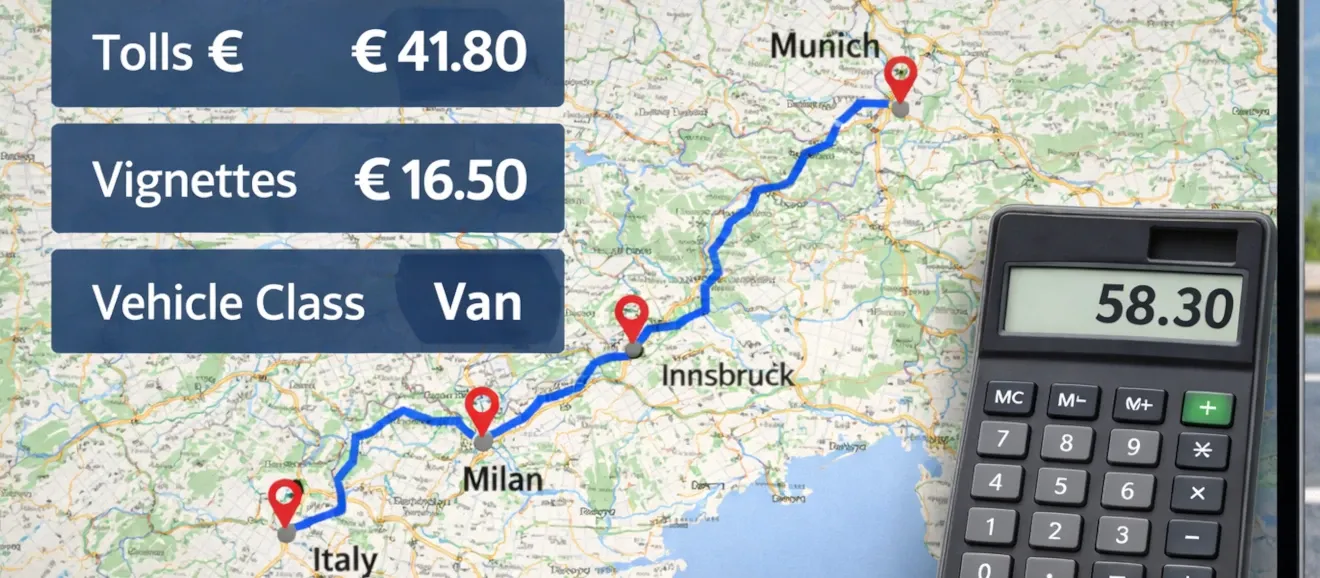
Manual calculation is only okay for simple scenarios. It might work for a single country with a single system. But if you are crossing multiple borders, it will be a nightmare and may result in errors.
A good calculator should:
- Allow routes involving multiple countries.
- Make a distinction between tolls and vignettes.
- Enable you to input the vehicle category.
- Highlight special sections.
Map apps can give you toll estimates, but not all regions are supported. Treat them as estimates, not guarantees.
Step 6: Identify Special Routes
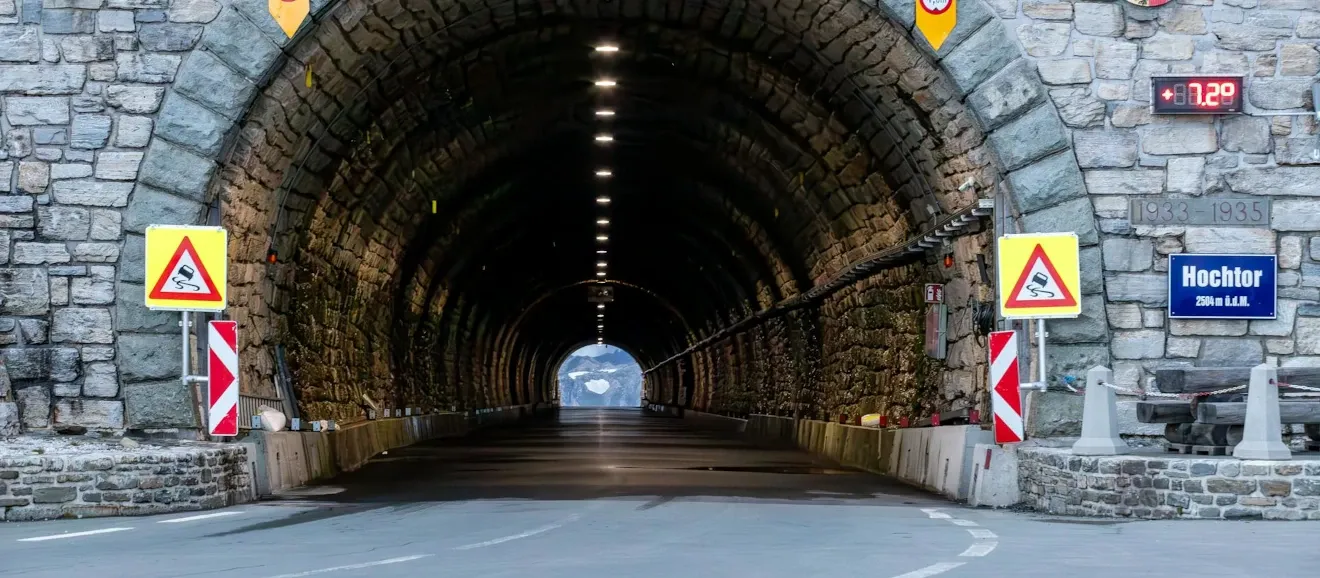
Now look at your route for:
- Alpine tunnels
- Mountain passes
- Bridge tolls
These are not necessarily included in your vignette and may be present even in countries where there are no tolls on general roads.
If you are crossing the Alps, assume there are tolls at these locations until you can confirm otherwise.
Step 7: Determine When and How to Pay
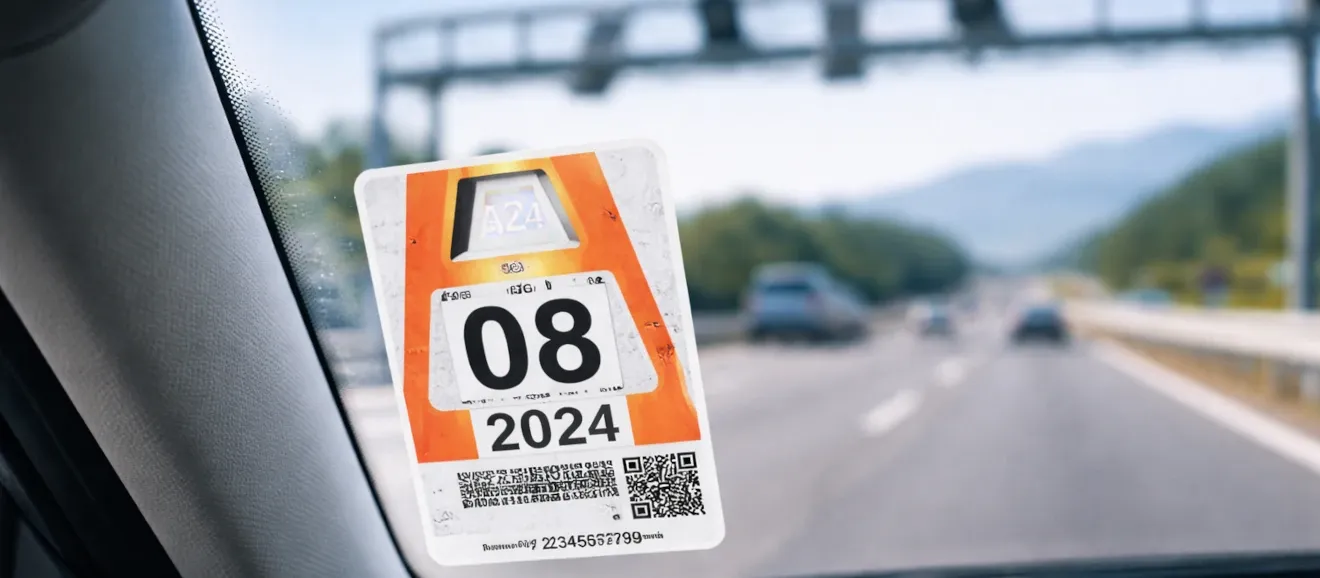
This step will help you avoid fines.
- Vignettes: Must be in effect before entering motorways. The camera can't hear your claim that you intended to buy one later.
- Digital Payments: Some countries have a consumer protection cooling-off period, which postpones the start time for some types of vignettes. If you are leaving soon, this is important.
- Toll Roads: Hold onto your tickets/receipts until the end of your trip.
Working Example: From Germany to Austria to Italy
This is a general example to help you understand how to plan your tolls and payments.
Step A. Countries Involved
Germany, Austria, and Italy
Step B. Charging Systems
- Germany: no general motorway toll for cars
- Austria: vignette required and possible Alpine section tolls
- Italy: distance-based toll roads
Step C. Vehicle Type
Passenger car, no trailer (standard case)
Step D. Payment Breakdown
Germany
- Autobahn usage: €0
- No vignette, no toll booths
Austria
- Motorway Vignette: mandatory to use motorways
- Special Sections: depending on the route (e.g., major alpine crossings), additional payment may apply even with a valid vignette
- The biggest risk is entering Austrian motorway territory without a valid vignette. That will land you a fine and a forced purchase of a vignette.
Italy
- Toll calculated by distance driven
- Paid when exiting motorways
- Amount varies by route and vehicle class
Step E: Putting the Numbers Together
- You buy the correct Austrian vignette in advance (time-based cost).
- You check whether your chosen alpine crossing requires an extra payment.
- You estimate Italian tolls using route distance and vehicle class.
Notice what we didn't do, and it's big. We didn't just take a quick look at an average, make some big assumptions, or put all our eggs in one basket with a single app screen to get the job done.
The Common Mistakes You'll Avoid With Our Guide
You'll avoid falling into the same traps that have caught so many other drivers:
- Assuming that Germany has no tolls, Austria might be the same.
- Thinking you can just wait until you're on the road and then sort out a vignette.
- Believing that the vignette will cover all your tunnel and special section fees.
- Getting your rental car type mixed up.
Your Toll Traveler Survival Guide
Before you take the wheel and start driving across Europe, make sure you do the following:
- Write down every single country on your route.
- Get a handle on what tolls are where, what vignettes are required and where, and which sections are special cases.
- Double-check the vehicle class of your rental car.
- Identify any Alpine tunnels or bridges you'll need to travel through.
- Buy what you need before you enter the country.
- Make sure you keep proof of payment.
Get the Toll Amount Right Before You Go
Working out your tolls in Europe might take a bit of effort, but trust us, it's worth it to avoid the trouble and fines.
With the simple steps we've laid out, you'll have a system that lets you predict what tolls you'll be facing. Don't skip any of these steps, because if you try to skip them, you'll probably end up paying a fine instead of the toll itself.
Stay informed with our travel blog
From border rules to toll-saving tips, our blog has everything you need to make your trip smoother.
Italy Free-Flow Tolls Explained: How to Avoid Missed Payments
Croatia e-vignette: More expensive and delayed
The introduction of the digital e-vignette in Croatia initially planned for the beginning of the year, has been further delayed and will be more expensive than initially expected. Holidaymakers in Croatia should be prepared for rising toll costs and continue to use the existing toll system. This article provides an overview of the reasons for the delay and explains what travellers need to know when travelling through Croatia.
Adria: Pay Attention to Traffic Regulations for Your Camping Trailer
Regarding your question about warning panels for your camping trailer, the necessity of such panels depends on the specific road traffic laws of the countries…