
Driving Without a Vignette in Europe: What Happens When You Don't Pay?
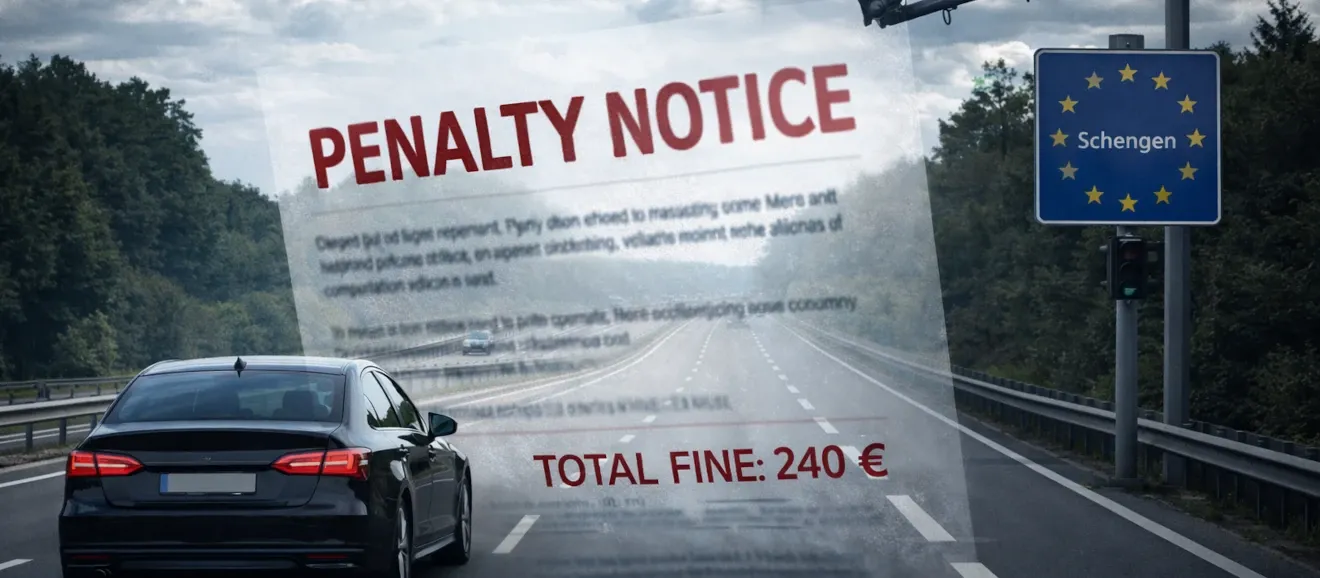
A detailed look at what really happens when you drive without a vignette in Europe. Learn how fines are triggered, how much they cost by country, and why late payment or ignorance never prevents penalties.
Most people believe that the danger of driving without a vignette is purely theoretical. That couldn't be further from the truth. The risk is very real.
The vignette system is based on one principle: non-payment is not an error, it's an offense. There is no booth, no sign, no second chance at the next exit. Cameras don't warn you, they record you. And once recorded, the result is already largely predetermined.
Here is a reality check for each country. We're going to cover how the fines are calculated, what they typically cost, and why "I didn't know" is never an excuse.
First: The Workings of Vignette Fines
In Europe, the vignette payment system is based on a few key points:
- You enter a controlled road without a valid vignette
- Cameras record your license plate, time, and location
- The system checks whether you were authorized at that exact moment
- If not, a violation is created automatically
Important detail: Buying a vignette after entering the motorway does not cancel the violation. There's no makeup.
That is why fines arrive days or weeks later, often by mail, rental company, or cross-border collection agency.
Fines and Enforcement By Country
Austria
Austria is one of the toughest vignette fine enforcers in Europe.
Fine range (passenger cars) = €120-€240 (replacement toll), higher if unpaid
The ways people end up with fines include:
- Accessing the motorway immediately after crossing the border
- Purchasing a vignette after entering the country
- Believing that short sections of motorways are toll-free
Austria has cameras positioned very close to the entry points. There is no leeway distance either.
Switzerland
The Swiss have a straightforward and uncompromising approach to enforcing their vignette fines.
Fine = CHF 200 (in addition to the obligatory purchase of the annual vignette)
Drivers find it particularly painful because they will still be required to pay for the vignette after the fine.
Even a short amount of travel without the vignette can result in a fine. It doesn't matter how far you travel without it.
Czech Republic
Fully digital system, fully automated checks.
Fine range = €80–€20
Drivers often access city motorways around Prague without noticing they're toll roads.
The reality is no sticker, no warning, no negotiation. Plate-based only.
Slovakia
Very similar to the Czech system, but with less lenient signs.
Fine range = €100–€150
Tourists often hit snags with night driving and border crossings.
If your plate isn't registered at the time of entry, the fine is automatically issued. No exceptions.
Slovenia
It's a small country, but compliance standards are high.
Fines = €300 for passenger cars.
Many tourists pass through Slovenia in under two hours and think they're exempt from fines. They're not.
Transit time doesn't count. If you use their toll roads, you must pay.
Hungary
Hungary's system looks friendly, but looks can be deceiving.
Fine range = €120–€200, increasing with delay
Many travelers make the mistake of entering a motorway "just for one exit" without a vignette. Hungary allows short grace periods only in very specific cases, but tourists rarely qualify.
Bulgaria
Bulgaria's vignette coverage is broader than most drivers expect.
Fine range = €150–€300
These fines happen because the vignette applies to many national roads, not just motorways. You can be fined without ever seeing an Autobahn-style road.
Romania
Romania's system is one of the least intuitive — and most punitive.
Fine range = €100–€250
The vignette (rovinietă) applies to almost all public roads outside cities. If you drive in Romania at all, you almost certainly need one.
Moldova
The vignettes are often forgotten, but rarely forgiven.
Fine range = €50–€100
Transit drivers and foreign vehicles often don't realize they need the vignette. Border police and roadside checks are common.
Special Attention For Germany
Let's be explicit again: no vignette exists for passenger cars in Germany. Therefore, no vignette fines apply to private vehicles. But that is not the end of the story:
- Trucks pay LKW-Maut.
- Environmental zones require emissions stickers.
- Some tunnels or ferries may be tolled.
These are not vignettes — and confusing them leads to bad assumptions.
Why Vignette Fines Feel So Harsh
The fines feel tough because they're not priced like tolls. Their purpose is to serve as a deterrent. As a result, they're intentionally painful.
A vignette might cost €10-€15 for short-term use. The fine is deliberately 10-20× higher.
The jurisdiction isn't trying to recover the lost revenue. It's an enforcement action.
The Bad Assumptions That Lead to Fines
- I'll buy it at the next exit.
- I was only on the motorway for a minute.
- Google Maps put me there.
- I didn't see a toll booth.
- It's probably free near the border.
Every one of these assumptions has resulted in millions of euros in fines across Europe.
The Real Cost of Driving Without a Vignette
The fine itself is only the beginning.
Add to that:
- Rental company administrative fees
- International processing fees
- Delayed notifications
- Lost time disputing something that's not disputable anyway
Suddenly, a €12 vignette fine becomes a €250-€400 lesson.
Compliance is the Solution
Europe doesn't want to make driving more expensive or difficult than it has to be. They just want people to follow the rules and pay for use of the toll roads.
If a country uses a vignette:
- Payment is required before entry
- Enforcement is automatic
- Excuses are irrelevant
The road won't stop you, but the system will remember you. Paying in advance will save you money and stress.
Stay informed with our travel blog
From border rules to toll-saving tips, our blog has everything you need to make your trip smoother.
Italy Free-Flow Tolls Explained: How to Avoid Missed Payments
Croatia e-vignette: More expensive and delayed
The introduction of the digital e-vignette in Croatia initially planned for the beginning of the year, has been further delayed and will be more expensive than initially expected. Holidaymakers in Croatia should be prepared for rising toll costs and continue to use the existing toll system. This article provides an overview of the reasons for the delay and explains what travellers need to know when travelling through Croatia.
Adria: Pay Attention to Traffic Regulations for Your Camping Trailer
Regarding your question about warning panels for your camping trailer, the necessity of such panels depends on the specific road traffic laws of the countries…