
Croatia Toll 2027: Electronic Toll Instead of Vignette
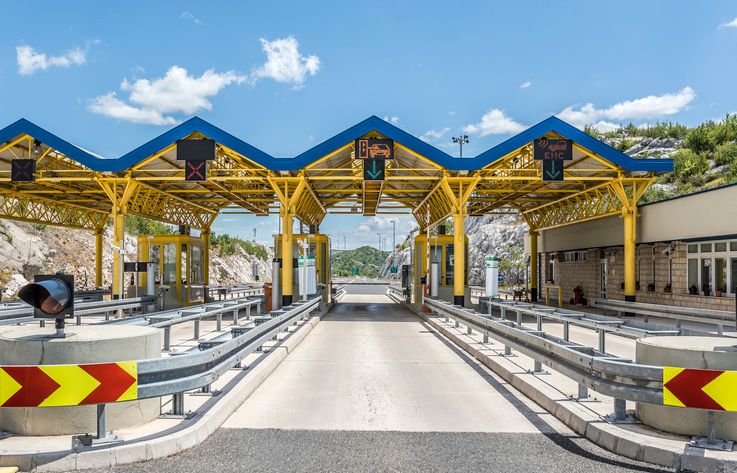
Croatia Toll 2027: New Electronic Toll System Instead of a Vignette
From 1 March 2027, Croatia will fundamentally change the way motorway tolls are collected. The existing toll plazas and barriers will gradually be replaced by the electronic Crolibertas free-flow toll system.
For drivers, this means that stopping at a toll booth, taking a ticket and paying at the exit will no longer be necessary. Instead, tolls will be recorded automatically either via the vehicle's licence plate or via an electronic toll device.
One point is particularly important for tourists: Croatia will not introduce a traditional motorway vignette in 2027. The Croatian toll system will remain distance-based. Drivers will continue to pay according to the motorway distance travelled and the vehicle category.
In this guide, we explain how the Croatia toll system from 2027 will work, whether you need a Croatia vignette, how electronic tolling works and what drivers should know before travelling.
Croatia toll 2027: the key changes at a glance
Here are the most important facts about the new Croatian toll system:
- Planned start date: 1 March 2027.
- No traditional Croatia vignette: Motorway tolls remain distance-based.
- No toll barriers: Croatia is switching to a multi-lane free-flow toll system.
- Cars and light vehicles: Drivers can use licence plate recognition or an ENC toll device.
- Vehicles over 3.5 tonnes: An ENC toll device will be mandatory.
- Registration required: Vehicles using licence plate-based billing must be registered and linked to a valid payment method.
- Nationwide toll system: Crolibertas is intended to cover Croatia's entire tolled motorway network.
- Foreign vehicles are included: The system is designed for tourists and occasional motorway users as well as Croatian residents.
Will Croatia introduce a vignette in 2027?
No. Croatia is not switching to a vignette system in 2027.
This is an important difference compared with countries such as Austria or Slovenia.
With a traditional motorway vignette, drivers usually pay for the right to use certain roads for a fixed period, for example ten days, one month or one year.
The Croatian motorway toll, however, will remain based on:
- the distance driven,
- the motorway section used,
- and the vehicle category.
The main change is therefore not the pricing model, but the way the toll is recorded and paid.
Anyone searching online for terms such as “Croatia vignette 2027”, “Croatia motorway vignette” or “digital vignette Croatia” should therefore be aware that Crolibertas is not a vignette system. It is an electronic, distance-based tolling system.
What is Crolibertas?
Crolibertas is the official name of Croatia's new electronic motorway toll system.
It is designed as a multi-lane free-flow system, often abbreviated as MLFF.
Instead of stopping at a toll plaza, drivers will simply continue along the motorway. Cameras, sensors and electronic equipment installed on overhead gantries will detect passing vehicles automatically.
The system combines two main technologies:
- ALPR: Automatic Licence Plate Recognition
- DSRC / ENC: Electronic toll collection using an in-vehicle toll device
The main advantage is simple: drivers no longer have to stop at a toll booth or barrier.
How will the Croatia toll work for cars from 2027?
For cars, motorcycles and other light vehicles up to 3.5 tonnes, two main payment and identification methods are planned.
Option 1: Toll payment via licence plate
For most tourists, licence plate-based tolling is likely to be the simplest option.
The vehicle must first be registered in the toll system and linked to a valid payment method.
When the vehicle enters and travels on a tolled motorway, cameras automatically recognise the licence plate. The system can then assign the driven motorway sections to the registered vehicle and calculate the corresponding toll.
For light vehicles, a physical toll box is therefore not necessarily required.
Option 2: Croatia toll with an ENC device
Drivers can alternatively use an ENC electronic toll device.
The device communicates with the toll system via DSRC technology while the vehicle is driving.
This allows the toll to be calculated and charged automatically without stopping.
For cars and other light vehicles, the use of an ENC device is expected to remain optional.
Do I need to register my car for Croatia's motorway toll?
If you want to use licence plate-based tolling, the vehicle must be registered before using the Croatian motorway network and connected to a valid payment method.
Different registration options are expected to be available, including:
- a central online portal,
- a smartphone app,
- digital registration services,
- physical sales and registration points,
- and possibly dedicated registration lanes or service areas.
The exact user interface and registration process for international tourists may still be refined before the full launch of the system.
Travel tip: If you are driving to Croatia in 2027, it will be sensible to register your vehicle and check your payment details before starting your journey.
Can you still pay the Croatia toll in cash?
Cash payments are not expected to disappear completely.
However, the traditional system of paying cash directly to an employee at a motorway toll booth will disappear with the introduction of free-flow tolling.
Cash-based payment options are expected to remain available through selected motorway operator sales points or prepaid solutions.
For most international visitors, however, online registration combined with electronic payment is likely to be the most convenient option.
What does the new Croatia toll mean for motorhomes?
For motorhome drivers, the 3.5-tonne threshold is particularly important.
For light vehicles up to 3.5 tonnes, drivers should generally be able to choose between:
- licence plate recognition,
- or an ENC toll device.
For vehicles with a permissible maximum weight of more than 3.5 tonnes, an ENC device will be mandatory.
Motorhome owners should therefore check the official vehicle weight and toll category before travelling.
Vehicles over 3.5 tonnes: toll device becomes mandatory
The rules are stricter for heavy vehicles.
For vehicles weighing more than 3.5 tonnes, an ENC electronic toll device will be required.
These vehicles will use DSRC technology for electronic toll collection.
Unlike light vehicles, heavy vehicles will therefore not be able to rely solely on licence plate recognition as an alternative tolling method.
What happens to Croatia's existing toll booths?
The new system is designed to operate without toll barriers and without stopping traffic.
As a result, the traditional toll plaza model will largely become obsolete.
Instead, Croatia is installing electronic gantries along its motorway network.
These gantries contain the cameras, sensors and communication systems required to identify vehicles and record motorway use automatically.
The installation work started well before the planned launch date in March 2027.
Which Croatian motorways will use the new toll system?
Crolibertas is intended to become a single electronic toll system for Croatia's entire tolled motorway network.
It will apply not only to motorways operated by Hrvatske autoceste, but also to toll roads operated by other concession holders.
These include:
- Hrvatske autoceste (HAC),
- Bina-Istra,
- Autocesta Zagreb–Macelj.
For tourists, this is an important advantage because Croatia is moving towards one nationwide electronic tolling solution rather than several separate toll systems.
Why is Croatia changing its motorway toll system?
The current toll booth system can create significant congestion, particularly during the busy summer holiday season.
The new electronic toll system is intended to improve traffic flow and modernise motorway payment.
The main objectives include:
- reducing queues at toll stations,
- eliminating the need to stop for payment,
- shortening travel times,
- lowering fuel consumption caused by stop-and-go traffic,
- reducing traffic-related emissions,
- lowering the cost of manual toll collection,
- digitising toll payments,
- creating one nationwide tolling system.
For tourists travelling to the Adriatic coast during the summer, avoiding long queues at toll booths could be one of the most noticeable benefits.
Croatia toll 2027 vs. motorway vignette
| Croatia toll from 2027 | Traditional motorway vignette |
|---|---|
| Distance-based toll | Usually time-based charge |
| Licence plate recognition or toll device | Sticker or digital registration |
| Price depends on route and vehicle category | Price usually depends on validity period |
| Free-flow system without barriers | Also usually no toll booths |
| No “Croatia vignette” | Common in countries such as Austria and Slovenia |
The similarity between the new Croatian system and a digital vignette is mainly that a licence plate can be registered electronically.
The billing model, however, remains fundamentally different.
6 things tourists should do before driving to Croatia in 2027
Before travelling on Croatian motorways from March 2027 onwards, drivers should keep these points in mind:
- Register the correct licence plate. Even a small typing error could lead to the vehicle not being recognised correctly.
- Check the payment method. Make sure the registered payment method is valid.
- Check the vehicle category. This is particularly important for motorhomes and heavier vehicles.
- Use official or trusted registration channels.
- Do not look for a Croatia vignette. Croatia continues to use distance-based tolling.
- Check the latest rules before travelling. Registration procedures and technical details may still be adjusted before launch.
What happens if you do not pay the Croatian motorway toll?
The new Croatian toll legislation provides for controls and penalties in cases where a tolled motorway is used without the required registration or payment.
Vehicles can be checked through stationary infrastructure and mobile enforcement units.
International visitors should therefore not assume that driving a foreign-registered vehicle makes the toll optional.
Drivers using rental cars should also clarify in advance whether the rental company handles registration and toll payment or whether the driver must register the vehicle separately.
Frequently asked questions about the Croatia toll 2027
When will Croatia introduce the new electronic toll system?
The key provisions for the new toll system are scheduled to take effect on 1 March 2027.
Do I need a vignette for Croatia in 2027?
No. There will be no traditional motorway vignette for Croatia under the planned system.
Croatia will continue to charge motorway tolls based on distance and vehicle category.
How do I pay motorway tolls in Croatia from 2027?
Cars and other light vehicles will be able to use either:
- automatic licence plate recognition,
- or an ENC electronic toll device.
Vehicles over 3.5 tonnes will be required to use an ENC device.
Will I still have to stop at Croatian toll booths?
No.
Crolibertas is a free-flow tolling system, meaning vehicles are recorded automatically while driving.
Do foreign licence plates have to be registered?
Yes, if a light vehicle uses licence plate-based tolling, the vehicle and its licence plate must be registered in the system and linked to a valid payment method.
The requirement also applies to foreign vehicles.
Can I still pay the Croatia toll in cash?
Cash payment options are expected to remain available through selected sales points or prepaid solutions.
However, paying cash directly at motorway exit toll booths will no longer be the standard method once the free-flow system is operational.
Will motorway tolls in Croatia become more expensive in 2027?
The introduction of the electronic toll system does not in itself mean that all toll prices will automatically increase.
The underlying principle of charging according to distance travelled and vehicle category remains in place.
Travellers should nevertheless check the current official toll rates shortly before departure.
Conclusion: No Croatia vignette, but fully electronic motorway tolling
The Croatia toll system will become electronic in 2027, but Croatia is not switching to a motorway vignette.
From 1 March 2027, the Crolibertas system is scheduled to replace the traditional toll booth model.
Cars and other light vehicles will be able to use either automatic licence plate recognition or an ENC electronic toll device. Vehicles over 3.5 tonnes will require an ENC device.
For tourists, the biggest change will be convenience: stopping at toll stations, taking tickets and paying at barriers will no longer be necessary.
At the same time, drivers will have to make sure that their vehicle is correctly registered and connected to a valid payment method before using a tolled motorway.
So if you are searching for a “Croatia vignette 2027”, remember this:
Croatia is not introducing a vignette in 2027. It is introducing a barrier-free, electronic and still distance-based motorway toll system.
Information status: August 2026.
Sources
- Croatian Government: introduction of the new motorway toll system from 1 March 2027.
- Croatian Toll Collection Act, Narodne novine NN 156/2025.
- Hrvatske autoceste (HAC): Electronic Toll Collection System project information.
- Official Crolibertas information platform: system functionality and technology.
- Crolibertas / HAC: installation progress of electronic toll gantries.
- Official Crolibertas information on payment and registration options.
Stay informed with our travel blog
From border rules to toll-saving tips, our blog has everything you need to make your trip smoother.
Italy Free-Flow Tolls Explained: How to Avoid Missed Payments
Croatia e-vignette: More expensive and delayed
The introduction of the digital e-vignette in Croatia initially planned for the beginning of the year, has been further delayed and will be more expensive than initially expected. Holidaymakers in Croatia should be prepared for rising toll costs and continue to use the existing toll system. This article provides an overview of the reasons for the delay and explains what travellers need to know when travelling through Croatia.
Adria: Pay Attention to Traffic Regulations for Your Camping Trailer
Regarding your question about warning panels for your camping trailer, the necessity of such panels depends on the specific road traffic laws of the countries…
Electronic vignette also in the Czech Republic since 2021
The switch to the electronic vignette has numerous advantages. It simplifies the purchasing process, as motorists can now purchase and manage the vignette online instead of dealing with an adhesive vignette's physical purchase and application. In addition, digital recording enables more efficient control and management of the motorway network.